When Miss Nature’s Arizona Pride Tour returned to Yuma this spring, about 100 people attended the drag show.
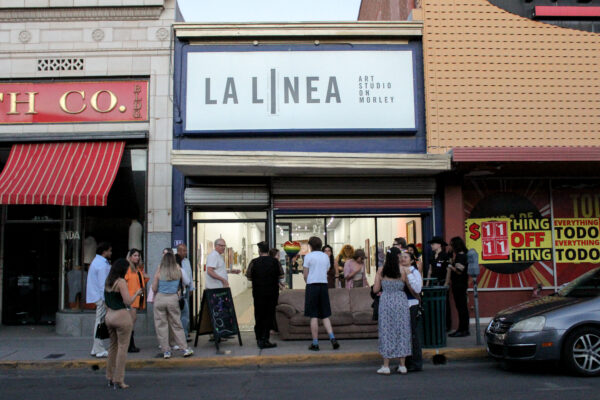
In Nogales, a smaller crowd opened “Body Language,” a queer art exhibit that launched local Pride Month celebrations.
But in Douglas, residents often drive about 50 miles to reach the nearest LGBTQ+ support group, underscoring uneven access to community spaces across the region.
LGBTQ+ residents and organizers across Arizona’s border say local efforts are building connection, even as political and social barriers make those spaces harder to sustain.
Ayanna Desquitado, a community organizer with the ACLU of Arizona, noted that access to those spaces is closely tied to a queer person’s ability to exercise their constitutional rights.
“It’s having freedom of expression without having some sort of narrative or harm pushed on them as a result,” they said.
For local performers Robbie Rodriguez and Elise De La Torre, known as drag sisters Inky and Poison Oshanns, the stop in Yuma provides a platform for the queer community – and turnout reflects strong demand.
“These events are really special to me because I get to see a glimmer of community. But I do wish that we did more,” Rodriguez said.
Finding Liberation and Belonging
Growing up in Nogales, Juan Miguel Garcia rarely saw other gay people around him, so he turned to television. Around 2010, he noticed queer people portrayed as fully realized characters rather than punchlines, helping him imagine an authentic future for himself.
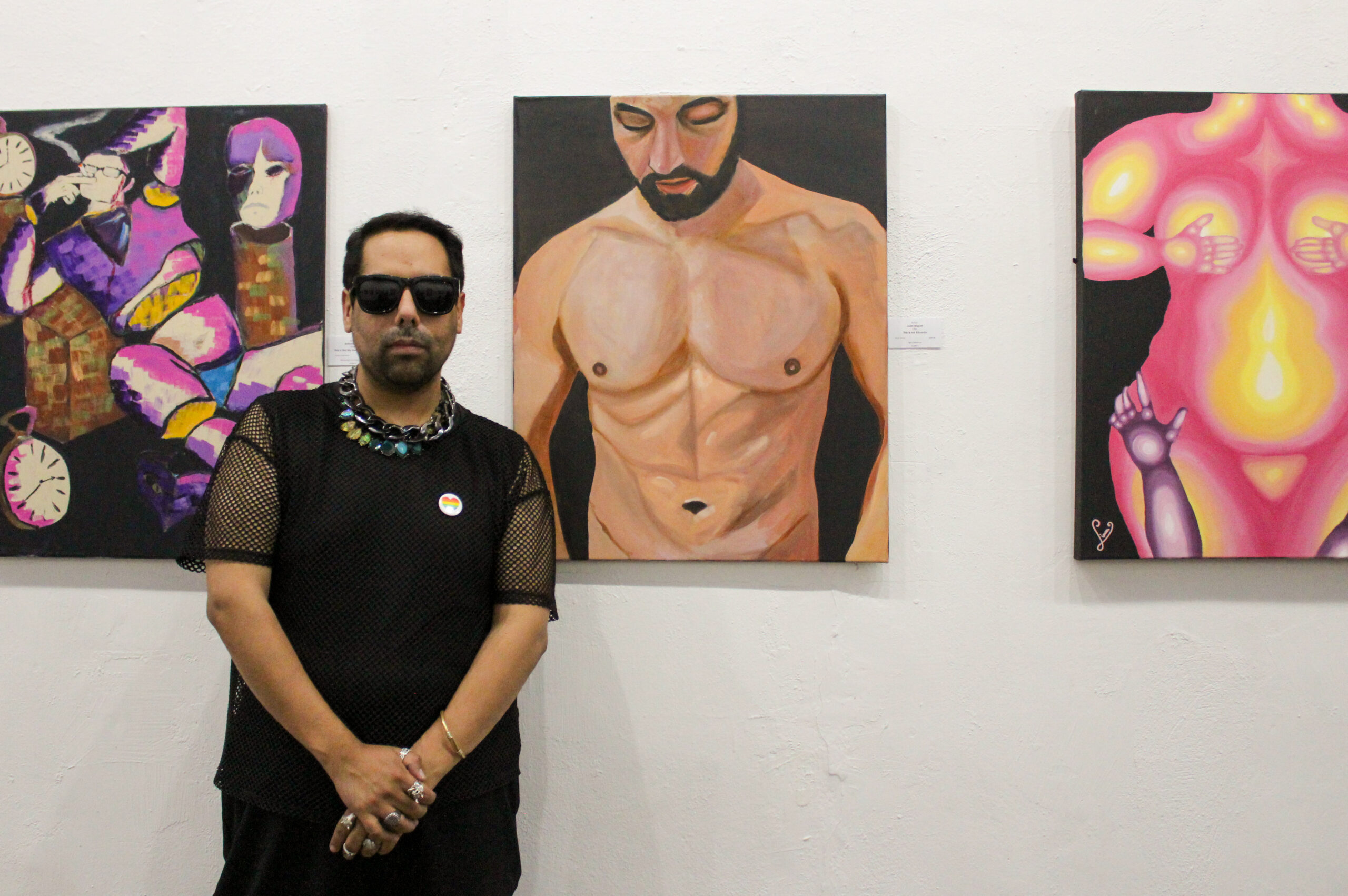
With his painting, "This is not Eduardo," Nogales artist Juan Miguel Garcia explores the conventional beauty standards that he said are also very present among the LGBTQ+ community.
"Unfortunately, we know it's something that can be taken away at any minute," he said.
De La Torre said social media was key for finding other queer people. But drag – introduced to her by Rodriguez – ultimately helped her understand her identity.
“Doing drag helped me discover that I was trans,” De La Torre said. “It sparked a sense of euphoria in me… and I felt like I didn’t want to take the drag off.”
Douglas resident Wolfgang Paradox spent their teenage years in Dubai, where same-sex relationships and transgender expression are criminalized. After moving to Arizona, they began exploring their gender identity, but the nearest support group was 50 miles away in Sierra Vista – requiring long drives to maintain that network.
Residents said border towns lack community spaces in general – making connection harder.
Jaynee Anne Monarrez and her wife Pamela Santos, Nogales residents, noted their identities are not limited to the LGBTQ+ community, and urged for spaces that allow connection through overlapping interests.
“We need to experiment with different things to see what works and what doesn’t,” Monarrez said. “The goal is not to segregate.”
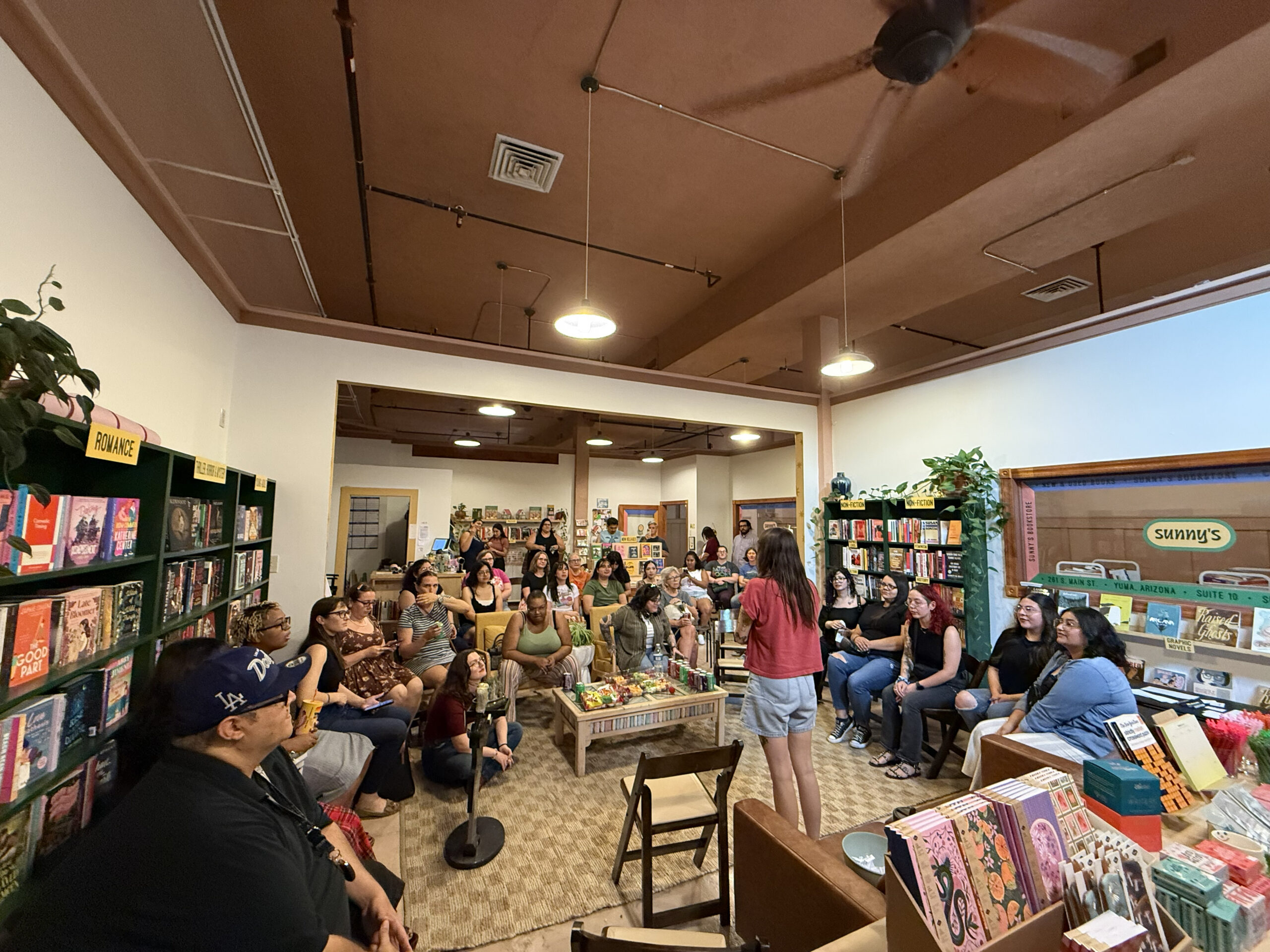
Community members gather at Sunny's Bookstore in Yuma for "Sunny's Salon," a monthly gathering with agendas that can range from book swaps, adult spelling bees, trivia, and bookish craft nights.
Photo courtesy of CJ Alberts.
Sunny's Bookstore in Yuma and La Linea Art Studio in Nogales build that type of environment. While the aesthetics may reference queer culture and identity, Sunny’s owner CJ Alberts said their activities go beyond an LGBTQ+ focus.
“Having obvious markers for people to find themselves… puts you at ease so you know you’re entering a space that is more aligned with your values and identity than not,” she said.
Those efforts to create safe and inclusive spaces are essential for organizing support for LGBTQ+ people. Desquitado noted that “hearing from someone directly, especially if it's someone within your community, makes the issue real and creates a lot more empathy to the situation.”
When Visibility Meets Hostility
But visibility can also invite opposition.
“It's easy to villainize certain groups of people when you don't understand them,” Desquitado said.
When allies requested the Nogales City Council’s permission to paint a rainbow crosswalk on a city street, faith-based opposition emerged. Elected officials denied the request, ruling it out as a driving hazard.
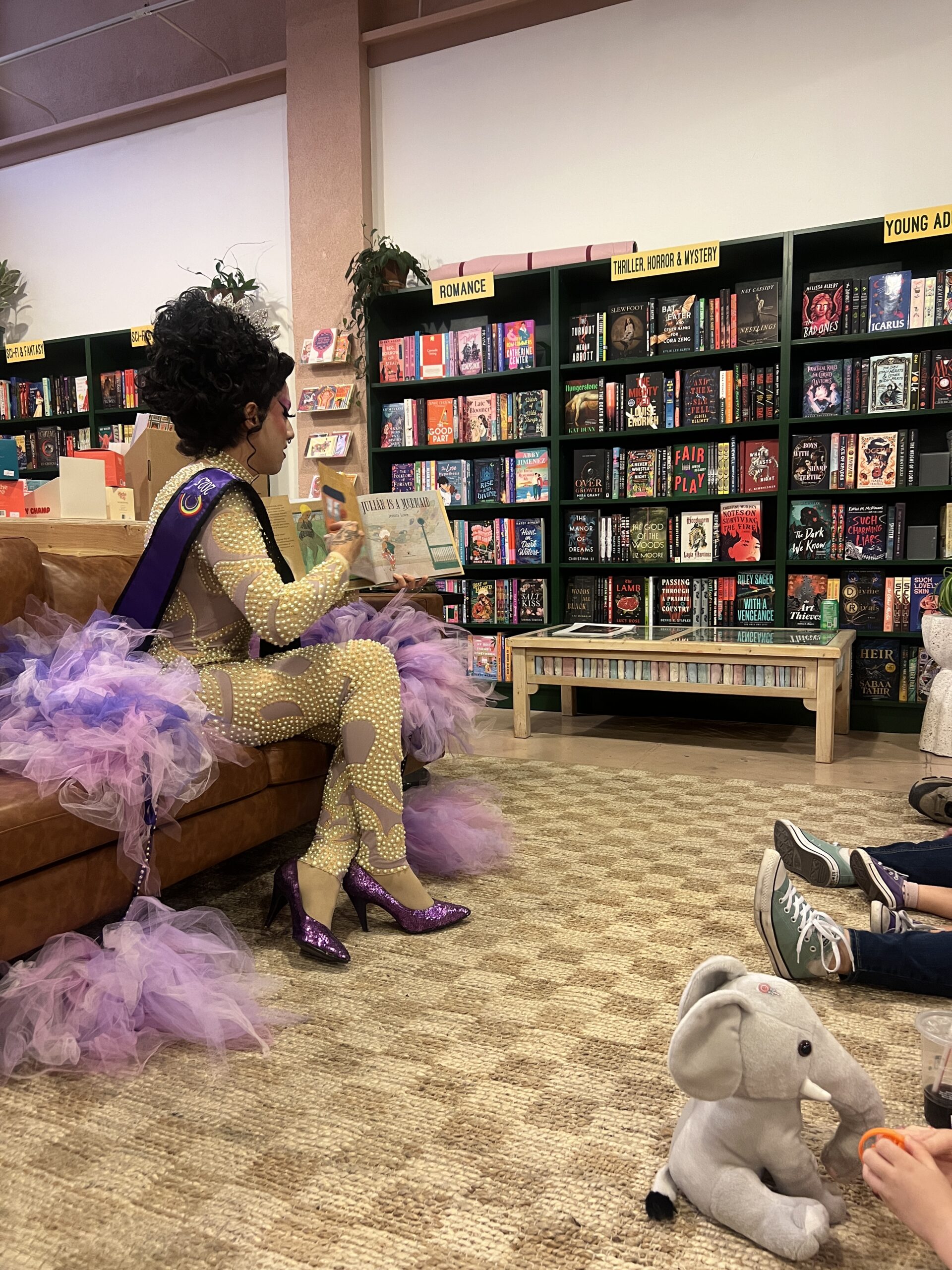
Inky Oshanns reads to a group of children during drag story hour at Sunny's Bookstore in Yuma.
Photo courtesy of CJ Alberts
De La Torre and Rodriguez said their art of drag also comes with hostility – including backlash when they performed at an all-ages drag brunch, as well as an adults-only drag show at a former church. Rodriguez said, “as drag queens, there’s always the politics behind the drag. …It’s being a glamorous projection with a message.”
And in 2024, a federal jury convicted a man of arson and hate crimes for setting fire to two churches in Douglas – crimes fueled by his opposition to women and LGBTQ+ people in leadership roles.
Rev. John Caleb Collins, vicar of St. Stephen’s Episcopal Church at the time of the arson and a member of the LGBTQ+ community, said the church hosted Pride events in an area he described as having “quiet ambivalence” toward queer people.
“Clearly we are making a difference because the arsonist was acting, in my opinion, to silence the work that we’re doing,” he said.
Collins' experience reflects a broader reality: LGBTQ+ organizing often faces setbacks, but rarely disappears entirely.
“There are people who will rise to the occasion, who will be courageously vulnerable in responding to acts of violence… and that gave me hope,” Collins said. “Someone can take away our buildings, but they cannot take away our love.”
Waves of Activism
Across Arizona’s southern border, community groups have faded and reappeared over generations.
Aissa Huerta, director of La Linea, recalls efforts in Nogales – from informal LGBTQ+ meetups to Gay-Straight Alliance clubs that periodically appeared in schools. Organizing had been relatively quiet, until La Linea developed new programming focused on visibility – including the “Body Language” exhibit for this year’s Pride Month.
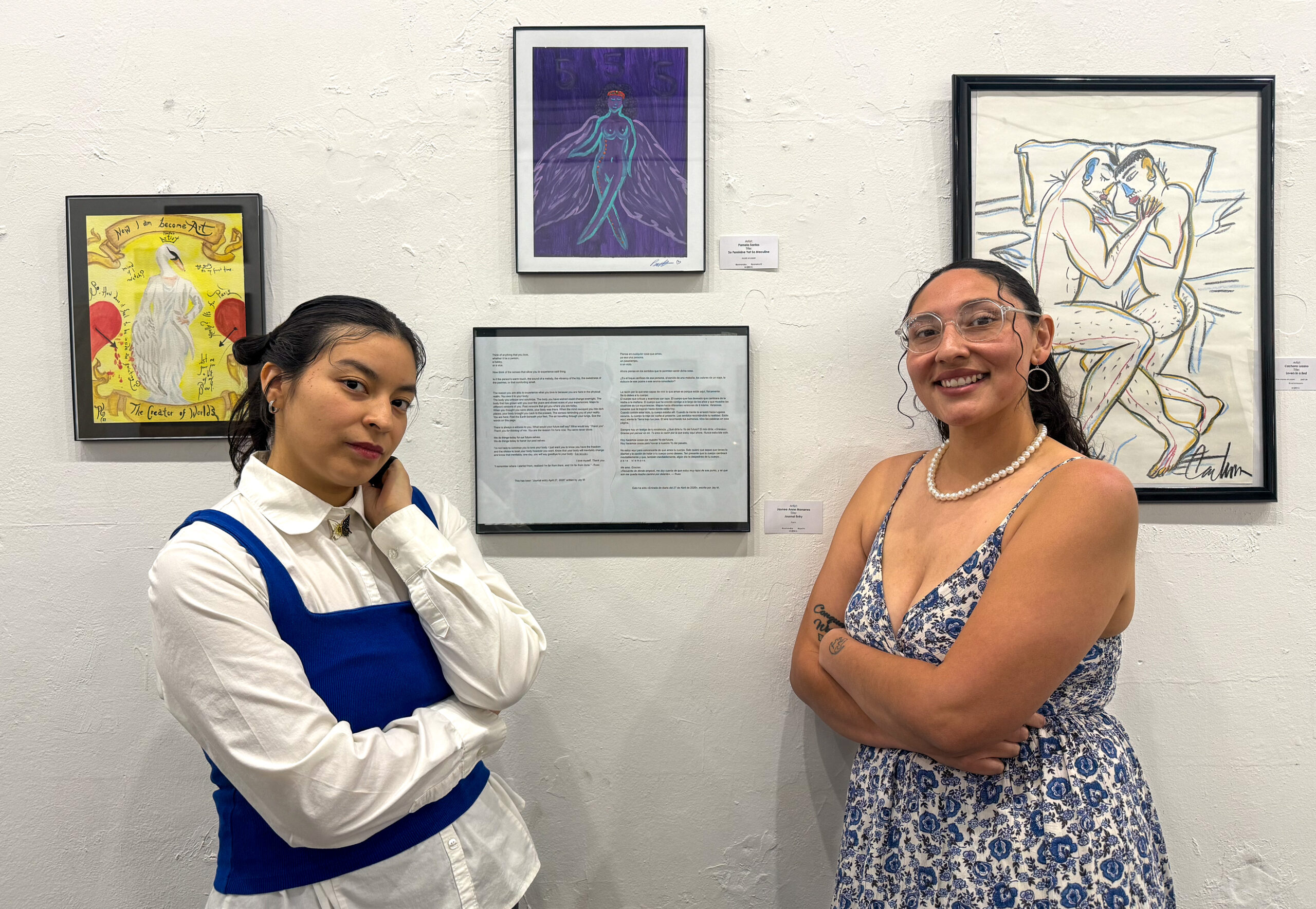
Jaynee Anne Monarrez, left, and her wife Pamela Santos entered a journal entry and a painting for the "Body Language exhibit at La Linea Art studio in Nogales. Monarrez's writing expresses her gratitude for her body, which allows her to move freely, while Santos' painting explores her feminine side.
“But it shouldn’t be left only to private organizations,” Huerta said. “It should be a constant initiative on behalf of our local government, on behalf of the people that represent us.”
In Yuma, organizer Peyton Ortiz said queer events declined during the pandemic, prompting her to lead a Pride march that drew about 200 people in 2021.
She founded CCSS – Citizens Curating Safe Spaces – to sustain year-round programming with partners including Parents and Friends of Lesbians and Gays (PFLAG) and One n Ten. Ortiz said CCSS has occasionally welcomed people from San Luis, a smaller border town about 25 miles away that, like Douglas, lacks local LGBTQ+ resources.
Paradox said those farther networks help counter isolation in small border communities.
“The opposite of community is isolation, and the lack of (gathering) spaces causes this deep isolation,” Paradox said. “The more public spaces that people have to gather… the more you're going to organically be able to find community.”
This piece was originally published in LOOKOUT.