

Standing inside a gym converted into a temporary shelter in Nogales, Sonora, *Miguel described his desperation: Recently deported from the United States, he had been separated from his wife and 1-year-old son in Seattle.
What’s more, U.S. immigration agents did not return his belongings, he said. He arrived without a cellphone to contact his family or his Mexican identification to more easily navigate his own country.
“I’m not a bad person. I went (to the United States) to work,” Miguel said.
Dozens of men and women who passed through the Nogales shelter last December reported similar experiences, saying wallets, cash, IDs, debit cards or cellphones were withheld upon their deportation.
Humanitarian workers in Nogales have tracked patterns of abuse and offenses by U.S. authorities since 2023. The failure to return personal property is one of several documented violations. Others reported being shackled at the wrists and ankles; denied food, water and bathroom access for hours; held in deplorable detention conditions; and deprived of medical care.
In some cases, the humanitarian nonprofit Kino Border Initiative (KBI) helps individuals file formal complaints against U.S. agencies – a practice the organization has maintained since 2016, said Tracey Horan, KBI’s associate director of education and advocacy. In 2025, KBI filed at least 17 complaints, she said.
“When we file complaints with these agencies, then they have the responsibility to investigate it,” Horan said. “So it has a function of letting U.S. officials know, ‘You’re not going to get away with this in secret.’”
Victoria López, executive director of the ACLU of Arizona, said the lack of transparency has been a hallmark for institutions like Immigration and Customs Enforcement (ICE) and Border Patrol since their existence – often allowing them to escape public scrutiny.
“This lack of transparency and failure of accountability of these agencies is not consistent with our Constitution, it’s not consistent with our laws, and frankly, it’s not consistent with how we should be operating as a democracy,” López said.
Individuals describe worse conditions in Arizona
Many migrants reported significantly harsher treatment in Arizona detention facilities than in other states. This pattern emerged repeatedly in 2025, based on dozens of firsthand accounts shared with KBI.
*Ximena, a mother of four who lived in Washington state for nine years, said she was treated relatively well during a weeklong detention at a Tacoma facility. That changed on the final day, when agents shackled migrants by the wrists and ankles and transported them to Arizona.
During the hours-long transfer across state lines, Ximena said, detainees were denied food, water, and even bathroom access. Upon arrival, officers shoved the still-chained migrants forward, shouting at them to move faster as people stumbled.
On Ximena’s final transfer to the Nogales port in early December, she said, passengers pleaded with the driver to turn off the air conditioning amid the already low temperatures. Instead, he turned it even colder.
Once inside Arizona facilities, multiple detainees said the abuse continued.
*Andres, who worked for a pharmaceutical company in Utah for more than a year, spent his final 24 hours of a three-week detention at the Florence Correctional Center. He said he was confined to a room designed for 80 people, but packed with roughly 200. With no mattress and little floor space, he slept in short stretches on the ground whenever he could. The restroom sometimes lacked toilet paper, he added.
Harsh treatment was not limited to Arizona, according to some individuals.
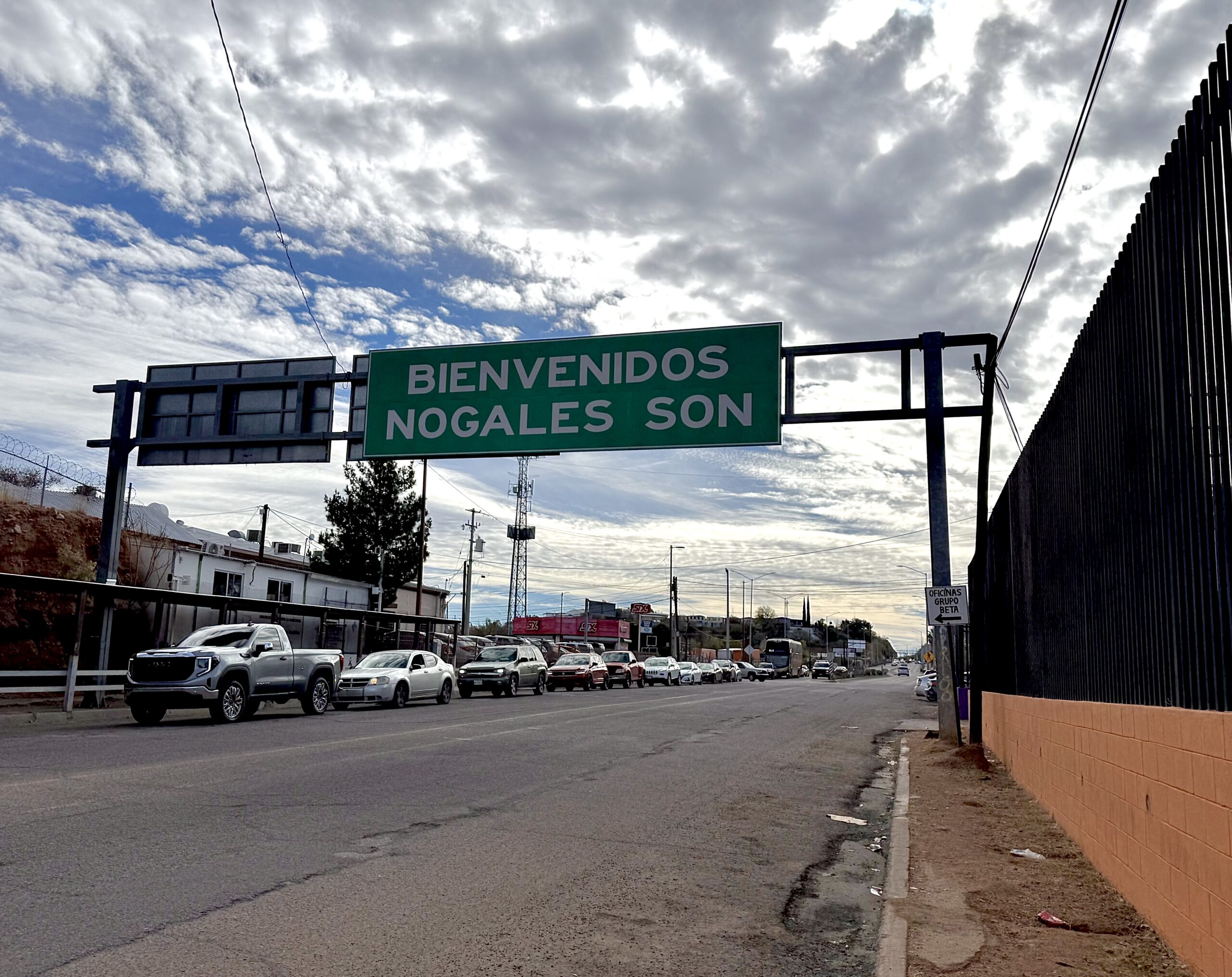
Hundreds of individuals were deported from the United States to Mexican border town of Nogales, Sonora last December.
Nine men detained in facilities in San Diego and Chula Vista, California, described their shared experience of being fed the same meal for every serving: a single chimichanga that smelled and sometimes appeared rotten. The facilities were kept very cold, and with only emergency blankets at their disposal, sweat pooled beneath the foil sheets – leaving them colder when they lifted the covers, they said.
On their final day, they were transferred at 6 a.m. and denied food until arriving at the Nogales port 17 hours later. Officers gave each person a cookie, a peach, and a small juice box before expelling them to Mexico. They noted that the conditions of their detention felt like psychological abuse.
López noted that the Constitution lays out how people should be treated when they’re in government custody. The Eighth Amendment, for instance, is meant to protect people from cruel and unusual punishment. And the 14th Amendment extends due process to all people in the United States, not just U.S. citizens. The government has a clear obligation to care for the people who are in their custody and U.S. law requires equal protection for citizens and non-citizens alike.
Authorities ignore pleas for medical aid
Some cases were even more dire, according to Yohana Oviedo, KBI’s media coordinator. Multiple people said medical emergencies in detention centers went ignored by authorities.
One such case involved *Karen, a mother and former police officer who sought asylum and was held at the Eloy Detention Center in Arizona for five months. During her detention, Karen was twice exposed to toxic smoke inside her unit, Oviedo said. In the first incident, a microwave caught fire overnight, filling the unit with smoke and chemical fumes. Detainees pressed the emergency button, but no officers opened the doors to let them out.
“The next morning, I woke up with dizziness, nausea, vomiting, a sore throat, and irritation in my throat and eyes,” Karen told KBI.
In another case, *Beatriz, who has an eye condition that requires medication and contact lenses, was detained at Eloy for a year. Oviedo said officers repeatedly ignored Beatriz’s requests for medical supplies, forcing her to choose between wearing the same contacts indefinitely or removing them and severely impairing her vision while in detention.
Beatriz continued wearing them, leading to an infection that left her with only 30% of her vision by the time she reached KBI last month, Oviedo said.
López noted that medical neglect cases like these are not new. For decades, there has been documentation that people in immigration custody cannot access adequate medical care, she said.
Last June, KBI helped Karen file a complaint with the Office for Civil Rights and Civil Liberties (CRCL), a federal entity within the Department of Homeland Security. The CRCL replied in September, stating that it would record Karen’s complaint in its database but would not take further action on the matter.
“We make it clear that it’s no personal benefit for your immigration case,” Horan said about filing complaints. “(But) there might be someone in the future, who’s migrating, who might not have to live the same thing because you’re raising your voice.”
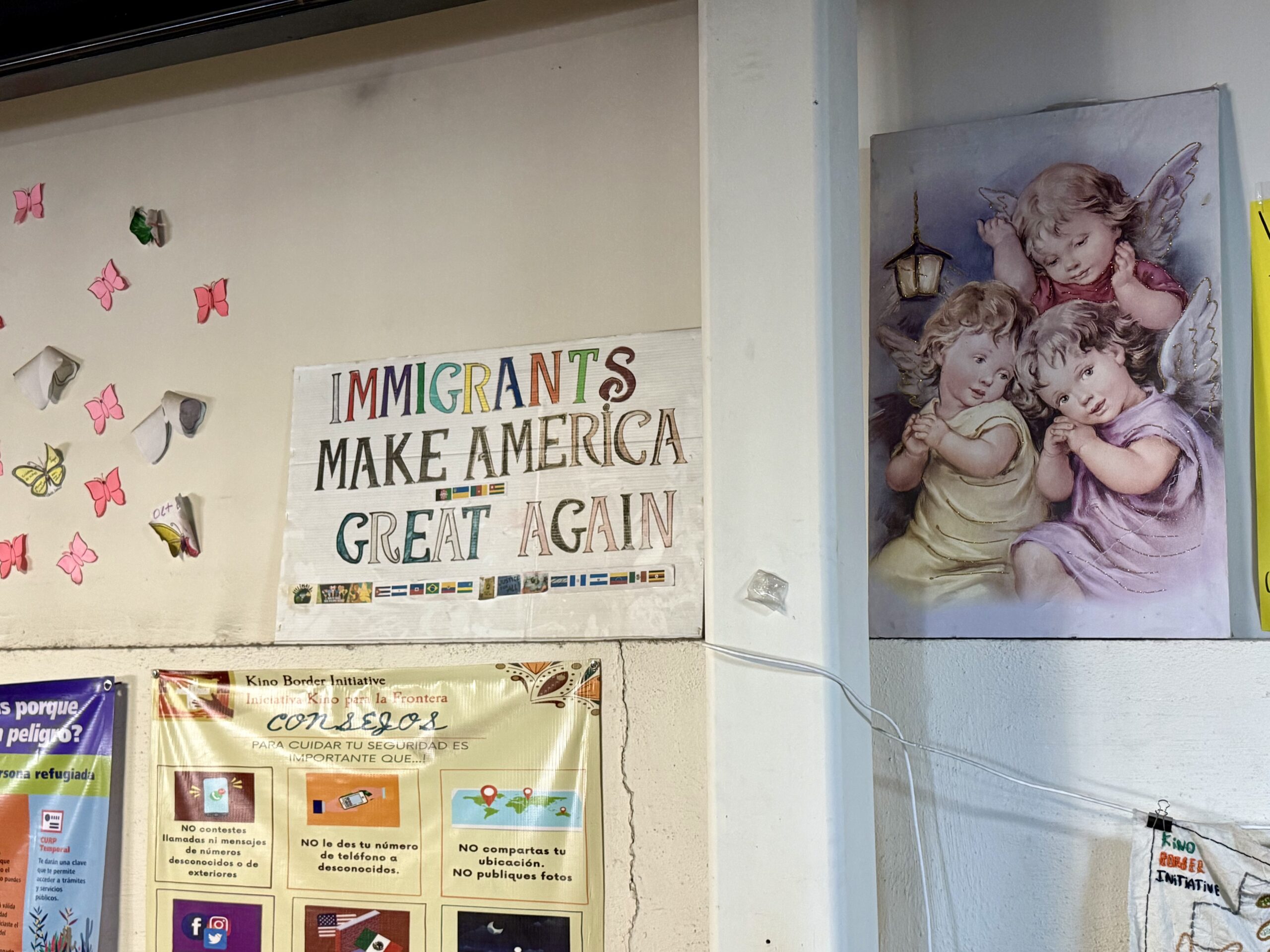
A handmade sign, hung inside Kino Border Initiative's migrant shelter, displays a wordplay on President Donald Trump's slogan "Make America Great Again."
Recognizing every small step
As the organization continues to amplify migrant voices, Kino Border Initiative has achieved small victories, Horan said – including in the case of *Alfredo, a Guatemalan man who was run over by a U.S. Border Patrol agent in March 2022.
According to KBI, Alfredo had just crossed the desert when a Border Patrol agent pursued him on an ATV and struck him, throwing him to the ground and severely injuring his knee. Authorities attempted to deport him immediately under Title 42, but Mexican officials refused to accept him after seeing his injury, Horan said.
Agents moved forward in deporting Alfredo after 10 p.m. that night, knowing Mexican officials would no longer be present at the port to intervene. Alfredo eventually arrived at the KBI shelter, where staff worked with the ACLU of Arizona to file a complaint, resulting in Alfredo receiving humanitarian parole so he could reenter the United States for treatment, Horan said.
“That’s the only complaint I know of where there was, specifically, confirmation that they took disciplinary action against the agent that caused the harm,” she said.
In February 2024, the ACLU of Arizona and several other organizations published a report documenting authorities’ routine confiscation and failure to return migrants’ belongings – such as in the case of Miguel, the man repatriated from Seattle. Months later, U.S. Customs and Border Protection issued a directive requiring agents to safeguard and return personal property.
However, federal officials have largely failed to follow through, as documented by repatriated individuals over the past several months. What’s more, Horan said, U.S. agencies have been much slower to acknowledge or respond to complaints over the past year. There was dead silence from oversight agencies for about six months in 2025, she said.
Ongoing fight for accountability
Some individuals at the Nogales, Sonora shelter said they had no desire to attempt reentry, citing the inhumane conditions of detention centers. Others said returning was their only option to support their families – even if it meant risking more time in detention.
“It’s worth it for my son,” said Miguel, the Mexican man who was separated from his wife and 1-year-old son in Seattle.
Miguel added that he loved the United States: The people in Washington state are kind, and he was able to build a stable life for his family. He wanted his son, a U.S. citizen, to grow up with those opportunities and both parents present, he said.
Oviedo emphasized that the ongoing fight for fair immigration policies goes beyond humane treatment and includes protecting people’s right to migrate.
“Human rights aren’t lost when you’re in a country that’s different from the one you were born in,” she said.
López noted that immigration cases are civil proceedings – not criminal – yet, migrants’ experiences show that immigration enforcement practices have become punitive and parallel to the criminal justice system.
At the ACLU of Arizona, López said, the team is largely focused on gathering critical information that allows them to hold government actors accountable for unconstitutional conduct. That includes monitoring federal plans to work with local agencies for immigration enforcement and expand detention capacity across the country.
“We know that there are shortcomings in our judicial system,” López said. “Documentation is important, not just for legal battles, but it’s also important to be able to tell the full story and limitations of what our legal rights are, of what our laws are.”
*Names were changed for privacy and security purposes